

Robotic manufacturing · Brisbane, Australia
A robot. A material.
A world of possibilities.
This is where the digital becomes physical. Our robotic arm lays down polymer, one bead at a time, building the shape and the texture together.
Meet the maker.
Six axes of motion and a pellet-fed extruder. The machine follows a carefully planned path; the idea behind it can go in all kinds of directions.
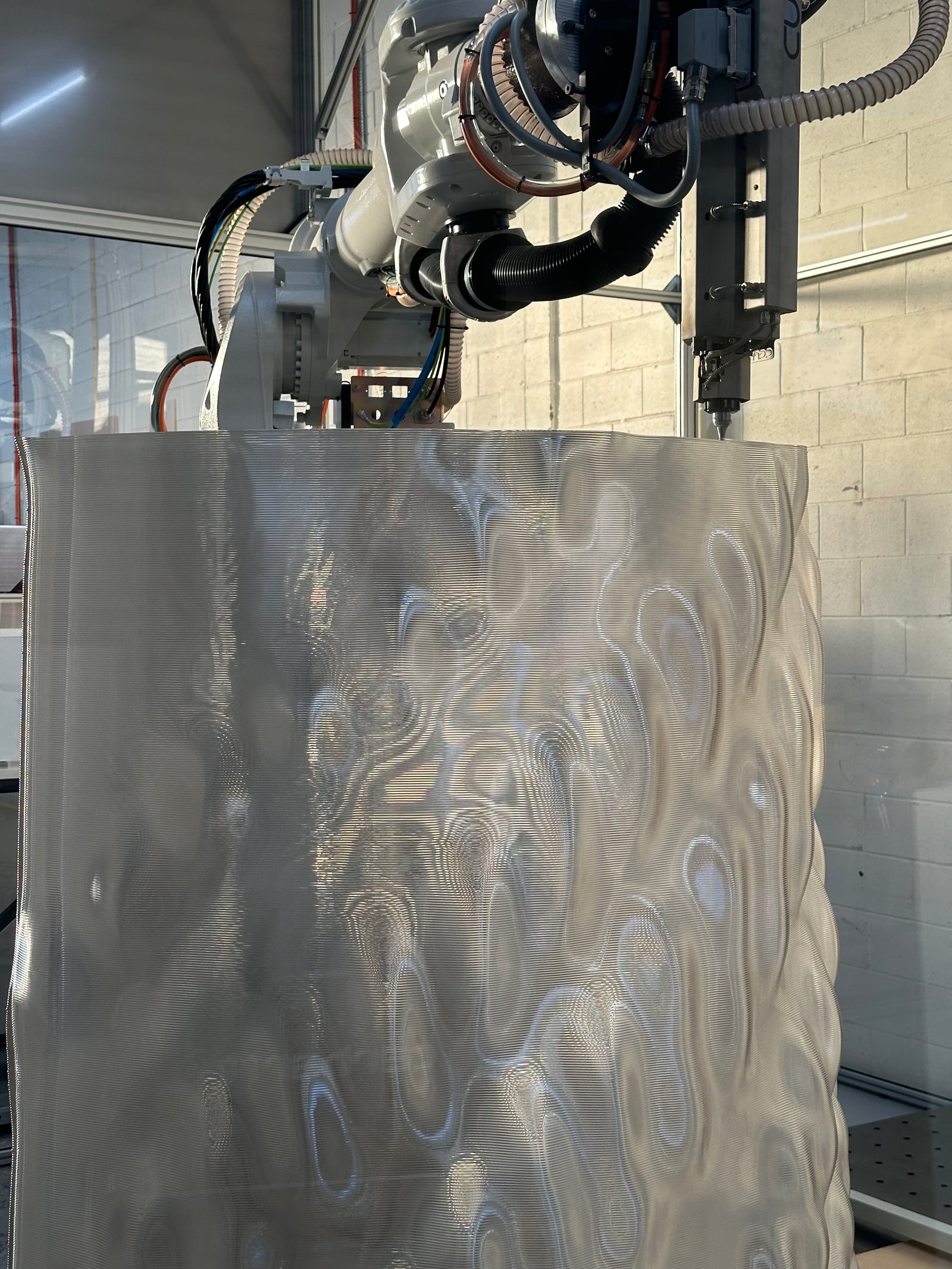
- 6-axisRobotic motion
- A robotic arm guides the extruder around the form.
- >5 m³Print volume
- Room to think beyond the desktop.
- Pellet-fedMaterial extrusion
- Polymer pellets become the next layer of the object.
Part size depends on shape, material and print orientation. Bigger projects can be designed in sections.
There is a rhythm to it.
Watch the arm travel. See the layers build. Those lines are the record of a thing being made.
The details make the difference.
Keep the texture?
Print layers can catch the light or become a tactile feature. Finishing can change the effect.
What is its job?
A sculpture and a working part ask different things of their material and geometry.
How does it come together?
Joints and separate sections shape assembly, repairs and the object’s next life.
Before you start.
What size can you print?
Share the overall dimensions and model. The system has a print volume greater than 5 m³, but volume alone does not define the usable length, width or height of a specific part. We review the geometry and discuss segmentation if needed.
What accuracy and finish can I expect?
These depend on the material, geometry, print plan and any finishing operations. Highlight critical dimensions and visible surfaces so achievable requirements can be agreed for your project.
Which materials can we discuss?
We work with recycled and recyclable polymers, including PETG-based materials. The chosen grade, recycled content and recovery options are confirmed for each project.